
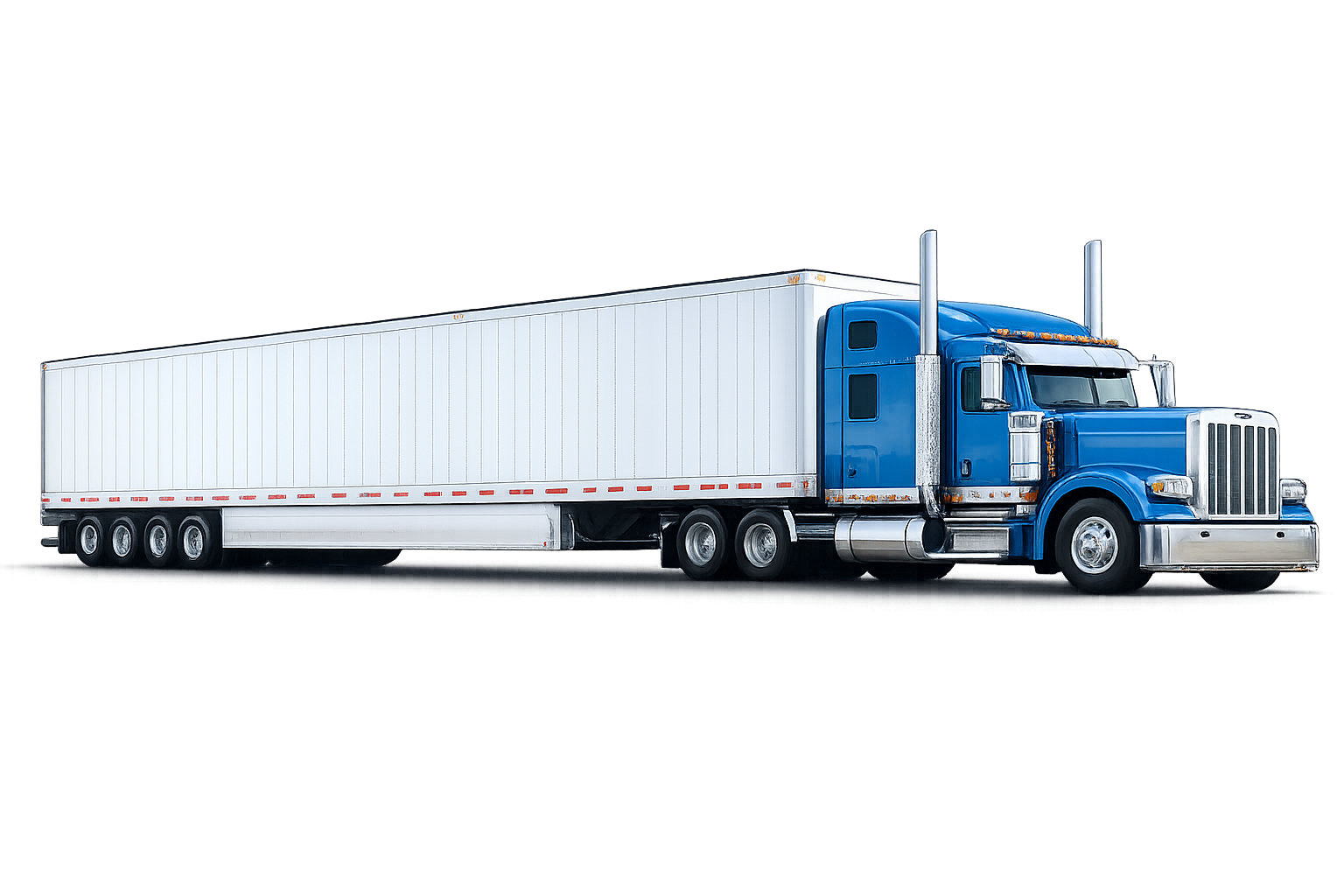

Protection for Every Mile of Your Business
Commercial truck insurance solutions for owner operators, motor carriers, trucking companies, fleet owners, logistics businesses, contractors, and new venture transportation operations.
What is commercial truck insurance?
Commercial truck insurance is designed for vehicles used in trucking, freight, hauling, delivery, logistics, contracting, and other transportation-related business activities.
A truck insurance program may combine several separate coverages. The appropriate structure can depend on the business entity, operating authority, vehicle ownership, lease arrangements, cargo, driver history, territory, contracts, and current insurance record.
Common commercial truck insurance coverages
Coverage availability, limits, deductibles, exclusions, and eligibility vary by carrier, state, policy, and business operation.
Commercial Auto Liability
May help protect the insured business against covered third-party bodily injury or property damage claims arising from a covered vehicle.
Physical Damage Coverage
May cover eligible collision, theft, fire, vandalism, weather, or other covered damage to scheduled commercial vehicles.
Motor Truck Cargo Insurance
May help protect eligible cargo against covered loss or damage while being transported, loaded, unloaded, or temporarily held.
General Liability Insurance
May help protect against certain covered claims involving business premises, operations, property damage, or bodily injury.
Non-Trucking Liability
May provide liability protection for certain non-business uses when an owner operator is operating outside dispatch, subject to policy terms.
Workers’ Compensation
May provide eligible medical, wage, disability, and related benefits for covered work-related employee injuries or illnesses.
Who may need truck insurance?
Commercial truck insurance may be relevant whenever vehicles are used for compensated hauling, delivery, freight, contracting, logistics, or other business activities.
Owner Operators
Independent authority holders, leased operators, and single-truck businesses.
Motor Carriers
Commercial carriers operating local, regional, interstate, or long-haul routes.
Fleet Owners
Companies managing multiple vehicles, drivers, trailers, routes, and contracts.
Delivery Companies
Box truck, last-mile, courier, parcel, appliance, and furniture delivery businesses.
New Venture Truckers
Newly established carriers and first-time commercial insurance buyers.
Specialty Haulers
Dump trucks, auto haulers, refrigerated carriers, flatbeds, and specialty operations.
What can influence truck insurance cost?
Insurance pricing is determined through underwriting and can vary significantly based on the complete risk profile of the operation.
Driving history
Driver experience, license history, violations, accidents, and claims.
Vehicle information
Truck type, age, value, equipment, condition, and intended business use.
Cargo and routes
Commodities, cargo values, operating radius, states, and travel frequency.
Business experience
Years in business, authority history, safety controls, and prior insurance.
How to request commercial truck insurance
Providing complete information helps reduce delays and supports a more accurate review of available insurance options.
Share your business details
Provide company information, authority details, operating history, and contacts.
Add trucks and drivers
Submit vehicle schedules, driver information, experience, and licensing details.
Describe your operation
Explain cargo, routes, radius, contracts, customers, and requested coverage.
Review available options
Compare applicable terms, limits, deductibles, conditions, and pricing.
Commercial truck insurance FAQs
Common questions from owner operators, trucking companies, and fleet owners.
A truck insurance program may include commercial auto liability, physical damage, motor truck cargo, general liability, non-trucking liability, workers’ compensation, and other coverage depending on the business and policy structure.
New venture insurance options may be available. Eligibility and pricing can depend on driver experience, vehicle type, authority, territory, cargo, safety controls, and underwriting criteria.
Cargo insurance is generally separate from auto liability and may have its own limits, deductibles, commodity restrictions, exclusions, and security requirements.
Commonly requested information includes company details, USDOT or MC numbers where applicable, vehicle schedules, driver records, cargo, operating radius, loss history, current coverage, and desired policy limits.
No. A quote request, website submission, email, or conversation does not bind coverage. Coverage must be confirmed in writing by an authorized representative after applicable requirements are completed.
Ready to discuss your truck insurance needs?
Tell NORTH STAR COMMERCIAL INSURANCE LLC about your trucks, drivers, authority, cargo, routes, operating history, and required coverage.